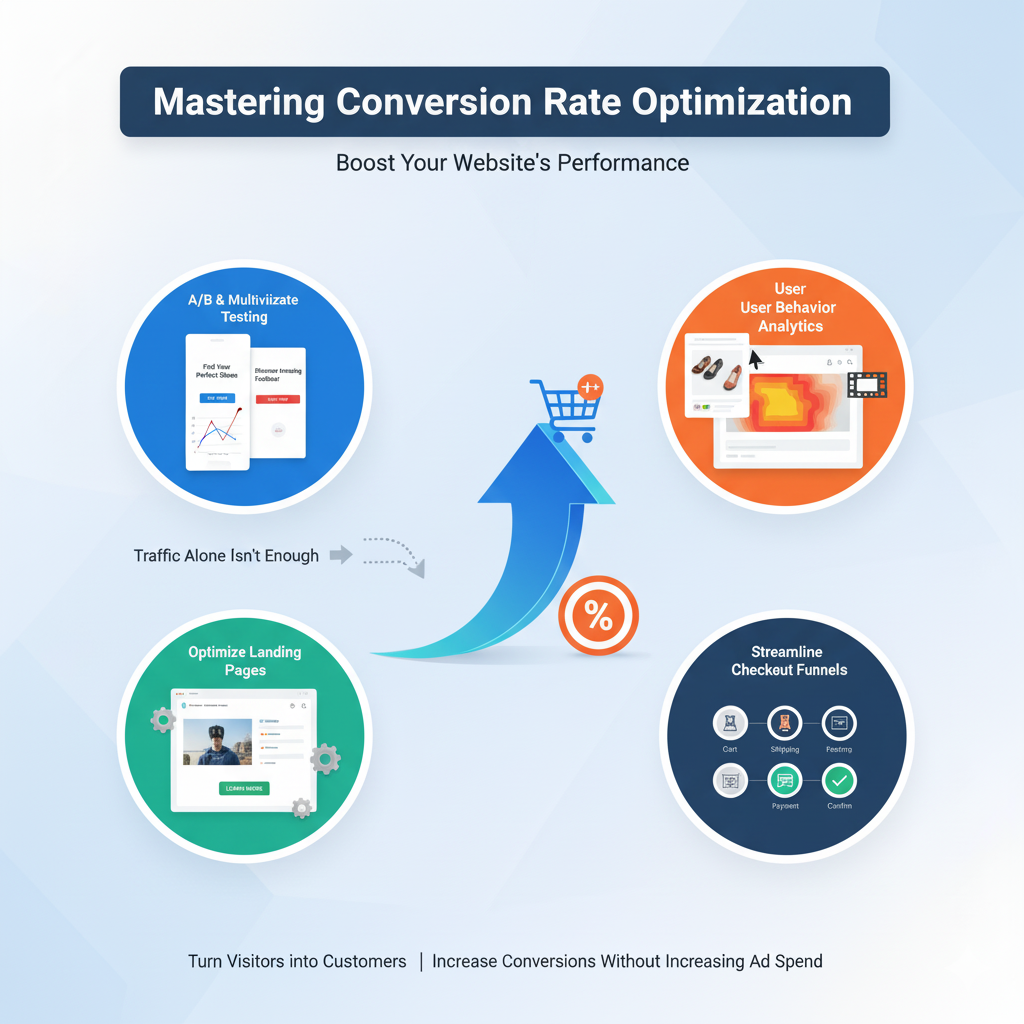
In today’s digital landscape, simply driving traffic to your website isn’t enough. The real game-changer is Conversion Rate Optimization (CRO), which focuses on turning visitors into customers. By refining elements like A/B and multivariate testing, analyzing user behavior through heatmaps and session recordings, optimizing landing pages, and streamlining checkout funnels, businesses can significantly increase conversions without increasing ad spend. This guide explores these key strategies to help you implement effective CRO.
Understanding A/B and Multivariate Testing.
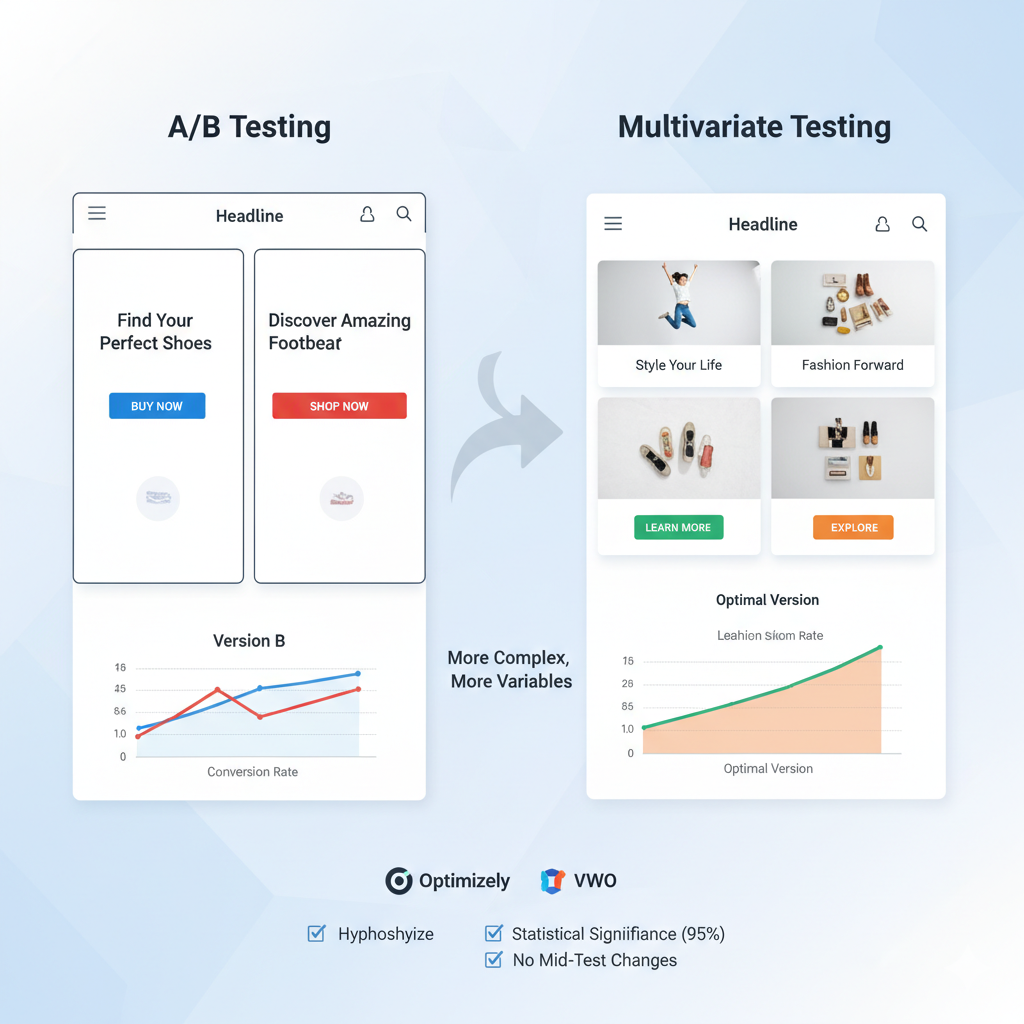
A/B testing involves comparing two versions of a webpage or element to see which performs better in terms of conversions. For instance, you might test different call-to-action (CTA) buttons—one red and one blue—to determine which drives more clicks. Multivariate testing takes this further by experimenting with multiple variables at once, such as headlines, images, and layouts, to identify the optimal combination.
Best practices include setting clear hypotheses based on data, running tests until statistical significance is reached (at least 95%), and avoiding mid-test changes. Tools like Optimizely or VWO can help automate this process, ensuring reliable results that inform broader optimizations.
Analyzing User Behavior with Heatmaps and Session Recordings
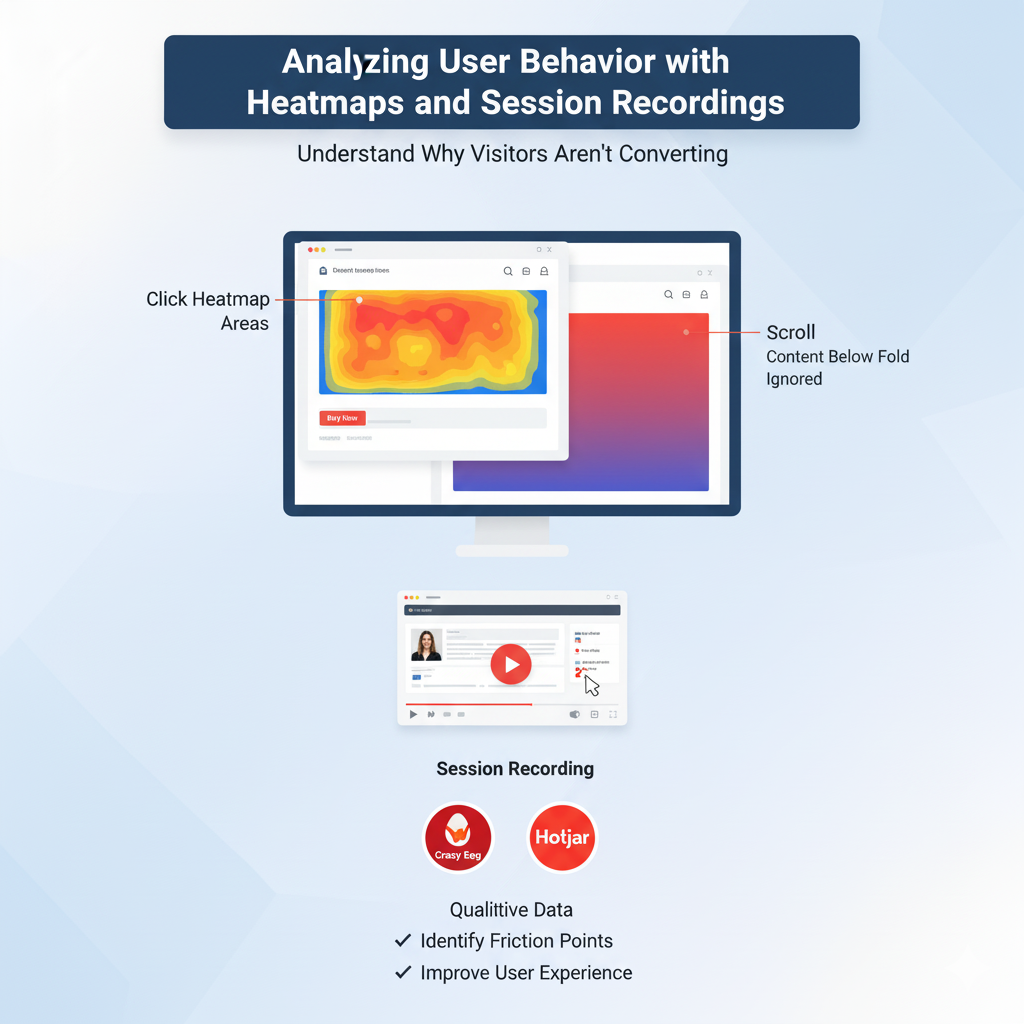
To truly understand why visitors aren’t converting, dive into user behavior analysis. Heatmaps visually represent where users click, scroll, and hover, highlighting high-engagement areas and ignored sections. Session recordings allow you to replay individual user journeys, spotting friction points like confusing navigation or slow-loading elements.
Implement these tools (e.g., Hotjar or Crazy Egg) to gather qualitative data alongside quantitative metrics like bounce rates. This insight reveals patterns, such as mobile users abandoning carts due to poor form design, enabling targeted fixes that improve overall user experience.
Optimizing Landing Pages for Maximum Impact
Landing pages are your first impression and a critical conversion hub. Optimization involves clear, benefit-focused headlines, compelling CTAs placed above the fold, and minimal distractions. Use social proof like testimonials and trust badges to build credibility, and incorporate expressive images—vibrant, emotion-evoking visuals that align with your brand and resonate with visitors.
For example, eCommerce sites can boost conversions by using high-quality product images that convey value and urgency. Test variations to ensure mobile responsiveness, as poor mobile experiences lead to high abandonment rates.
Streamlining Checkout and Funnel Optimization
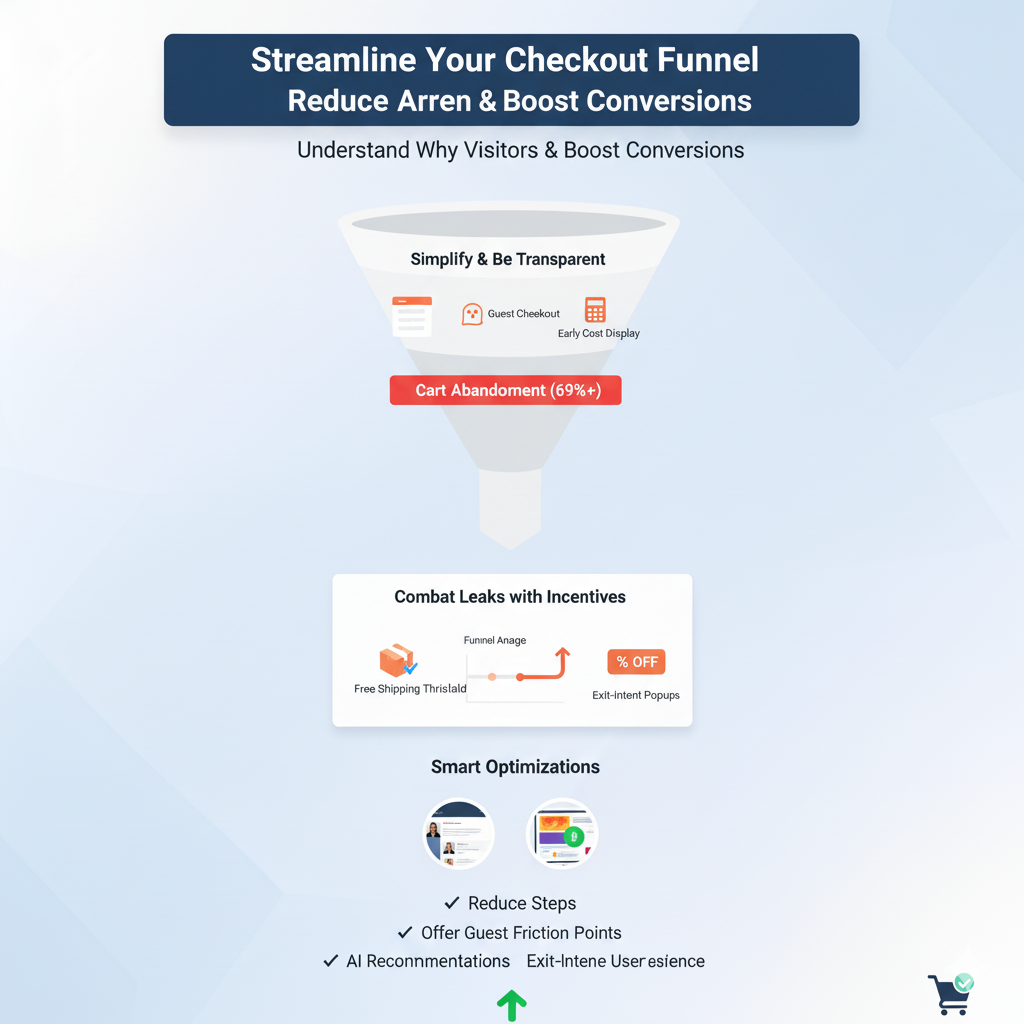
The checkout process is where many conversions falter, with cart abandonment rates often exceeding 69%. Optimize by reducing steps, offering guest checkouts, and transparently displaying costs early. Funnel analysis identifies leaks, such as drop-offs at shipping pages, which can be addressed with incentives like free shipping thresholds.
Personalize the funnel using AI recommendations based on browsing history, and use exit-intent popups with discounts to recapture leaving visitors. Regular A/B testing here can yield significant revenue lifts, as seen in cases where simplifying forms increased completions by over 50%.
Conclusion
Effective CRO is an ongoing process that combines data-driven testing, user insights, and targeted optimizations. By focusing on these areas, you can enhance user satisfaction, reduce acquisition costs, and drive sustainable growth. Start small with one test, analyze results, and scale up—your conversion rates will thank you.
Laisser un commentaire