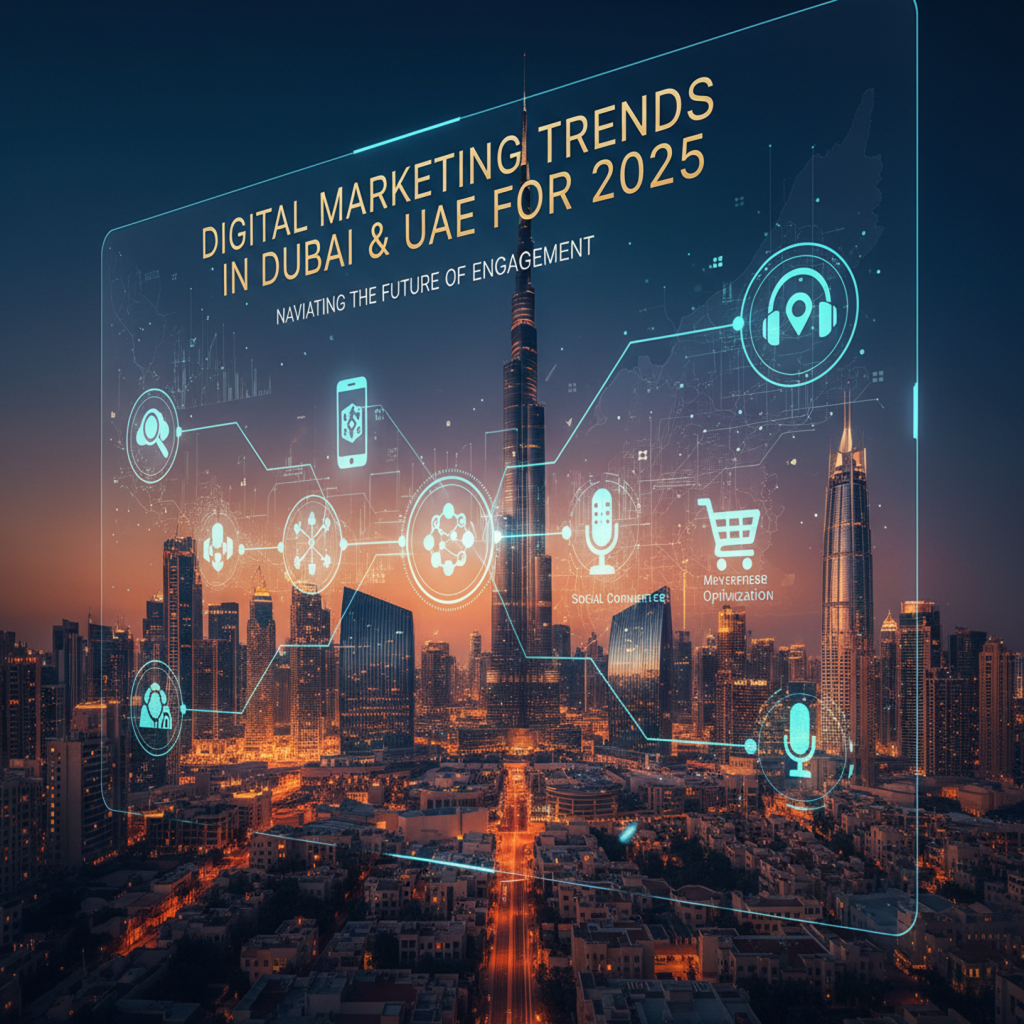
The digital landscape in Dubai and across the UAE is experiencing an unprecedented period of growth and innovation. As businesses gear up for 2025, understanding the evolving trends in digital marketing is not just an advantage—it’s a necessity. From the burgeoning power of social media to the transformative potential of AI, the region is a hotbed for digital marketing advancements. With 100% internet penetration, 11.3 million active social media users, and a median age of 31.6, the UAE presents a vibrant and digitally-savvy audience ready to engage.
Key Digital Marketing Trends in Dubai & UAE for 2025
1. Social Media & The Social Commerce Boom
Social media continues to dominate Dubai’s modern digital marketing industry, with platforms becoming integral to daily life. In 2025, social commerce is exploding, transforming how brands connect with consumers and drive sales directly within apps.
- Platform Diversity: While WhatsApp remains the most popular application, Instagram, Facebook, and TikTok boast high user numbers. Instagram, with over 5 million users, is particularly favored for social commerce due to features like Stories and Shopping. TikTok is rapidly expanding among younger demographics, YouTube excels in education and long-form content, and LinkedIn is critical for B2B relationships. Snapchat appeals to younger audiences with its visual capabilities, and Twitter continues as a key news and updates platform.
- Mobile-First Optimization: With most users accessing social media via smartphones, mobile-first optimization is paramount for businesses targeting Dubai. Seamless mobile experiences enhance engagement and conversions.
- Consistent Multi-Platform Branding: Brands must adopt a holistic approach, maintaining a consistent brand theme across diverse platforms—e.g., entertaining Reels on Instagram, educational posts on LinkedIn, and customer stories on TikTok—to maximize reach and recognition.
2. The Evolution of Influencer Marketing
Influencer marketing in the UAE is more powerful than ever, with efforts increasingly relying on YouTube, Instagram, and TikTok. The region’s influencer community, Creators HQ, has already attracted 2,415 people from 147 countries, underscoring its global appeal.
- Rise of Micro and Nano-Influencers: Brands are shifting focus to niche, authentic voices. Collaborating with local micro-influencers allows brands to showcase curated experiences, driving bookings and credibility over mere vanity metrics.
- Authenticity Over Vanity: Consumers are seeking genuine connections. Brands that prioritize authenticity in their collaborations see stronger engagement and trust.
- Hyper-Localization: Customizing campaigns for Dubai’s diverse communities is crucial. Influencers who resonate with specific cultural nuances and local preferences will be key to successful campaigns.
3. AI-Powered Personalization & Data-Driven Strategies
AI is reshaping the digital world—faster, smarter, and more precise—and it’s at the forefront of marketing in Dubai. Customers expect personalized interactions, and AI is making this possible at scale.
- Hyper-Targeted Campaigns: AI-based tools and CRMs will drive highly targeted campaigns, adapting content and messages based on individual consumer behavior and preferences.
- Enhanced Personalization: Brands can leverage AI and robust data to send personalized messages that significantly increase engagement and conversion rates.
- Content Creation & Optimization: From content generation to campaign optimization, AI will empower businesses to amplify their marketing efforts, making strategies more efficient and effective.
4. The Dominance of Video Content & Immersive Experiences
Video marketing and interactive content are no longer optional; they are essential for capturing attention and driving engagement.
- Video-First Content Strategy: Instagram Reels have become a dominant content format, offering significant opportunities for brands to boost visibility and engagement. Brands are using entertaining Reels, interactive stories, and engaging video content to raise brand awareness and sales.
- AR and VR Engagement: Augmented Reality (AR) and Virtual Reality (VR) are emerging as powerful tools for creating immersive brand experiences, allowing consumers to interact with products and services in novel ways.
Addressing Common Challenges in Dubai’s Digital Landscape
While the digital marketing sector in Dubai is flourishing, it also presents several challenges that businesses must navigate:
- Data Protection & Privacy: With increased personalization and data collection, ensuring robust data protection and adhering to privacy regulations is paramount to maintaining consumer trust.
- Growing Advertising Costs: As the market matures and competition intensifies, advertising costs on popular platforms are rising. Businesses need to optimize their spending and focus on highly effective, targeted campaigns. According to Statista, ad spending on social media advertising in the UAE is projected to reach US$447.60m in 2025.
- Maintaining Brand Consistency: Managing a diverse presence across numerous social media platforms while maintaining a consistent brand message and identity can be complex.
Conclusion: Positioning Your Brand for Success in 2025
The future of digital marketing in Dubai is dynamic, offering immense opportunities for expansion and creativity. By embracing cutting-edge trends like social commerce, authentic influencer collaborations, AI-driven personalization, and compelling video content, businesses can maintain a competitive edge. Addressing challenges such as data protection and rising costs with strategic planning will be crucial. Brands that prioritize innovation, invest in data-driven insights, and truly understand their audience will be the ones winning big in the UAE’s vibrant digital ecosystem in 2025 and beyond.
Laisser un commentaire